
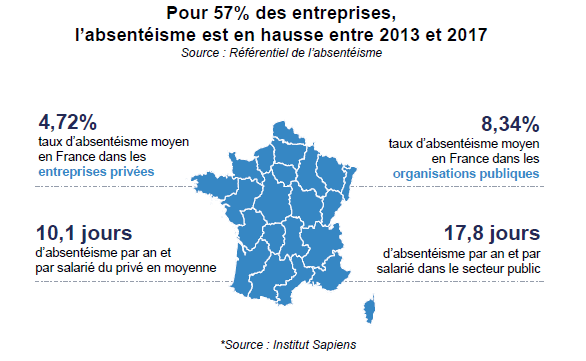
All surveys conducted on absenteeism point to the same conclusion: a steady increase in the phenomenon in France over the past several years! Faced with this major challenge for the private sector, it is crucial to move from simple observation to an effective action strategy.
Absenteeism statistics: a warning sign for performance
Six out of ten companies are facing an increase in’absenteeism for five years. A clear correlation has been established between the increase in absenteeism rate and the size of the company, with large corporations being the most affected.
Only 20% companies have managed to reduce their absenteeism over the past five years. This failure is often linked to the multifactorial nature of the problem, for which management does not always have the appropriate tools or expertise. The’absenteeism should no longer be seen as solely an HR issue; it is a business challenge that concerns senior management and the finance department due to its impact on competitiveness.
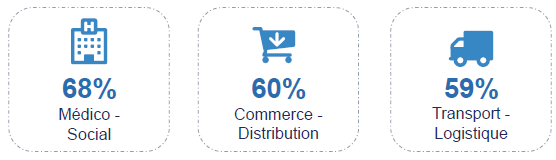
According to the latest study by the Absenteeism Reference Association, three sectors are characterized by above-average increases in absenteeism:
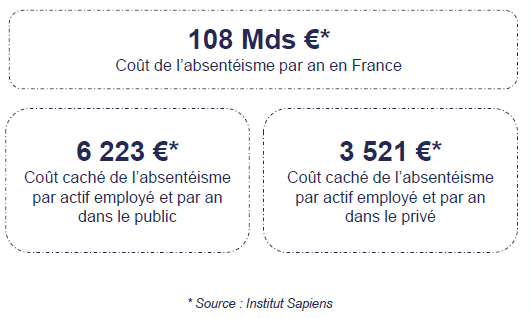
The actual cost of the’absenteeism in France
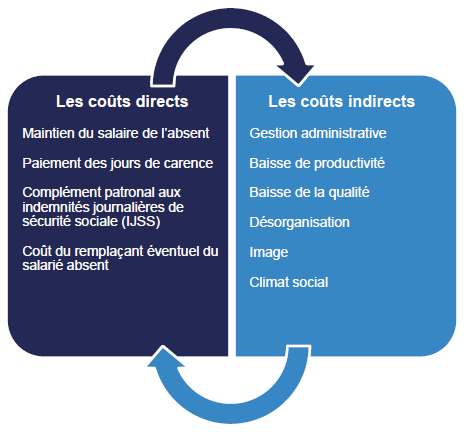
Theabsenteeism represents today 16% of the total amount of salaries paid in France. However, 85% companies do not have financial indicators to measure all costs (direct and indirect).
Monitoring specific indicators is a strategic link between the HR department, the Finance department, and senior management. Our expertise in Social Security Contributions Audit and in Management of HR DSN Indicators enables these raw data to be transformed into levers for social and economic performance.
Absenteeism rate : knowing how to calculate in order to act more effectively
One of the first difficulties is defining this composite indicator. For set up a relevant action plan, it is essential to distinguish between:
- Unavoidable Absences (non-absenteeism): Maternity leave, training, paid leave, etc.
- Compressible Absences (absenteeism to be monitored): Workplace accidents, occupational illnesses, common illnesses, unjustified absences.
The absenteeism rate Compressible absenteeism is the type that should be the focus of your monitoring, as it includes absences that can be controlled by the company and are directly related to working conditions or to the organization.
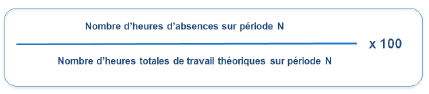
This calculation must be discussed internally (managers, employee representative bodies) to ensure that the scope is relevant to your organization. workplace and your specific challenges.
The real ones reasons for absenteeism : addressing risk factors
The company must focus on the most significant factors that are likely to be subject to intervention. Among these are reasons for absenteeism The most common ones include:
- An inaccurate assessment of the workload, leading to work overload.
- Lack of clarity in organization and management.
- The absence or weakness of managerial support felt by the teams.
- Of working conditions physical or psychological deterioration.
It is by identifying these business vulnerabilities that we can jointly develop an effective action plan for occupational risk prevention.
The challenges: beyond the direct cost
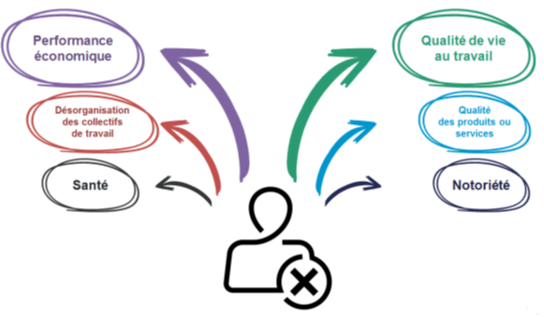
Theabsenteeism The cost of an employee's absence can average three times their direct expenses. The impacts are numerous:
- Decline in productivity and service quality.
- Damage to brand image and loss of customer confidence.
- Disengagement of current employees and increased risk of presenteeism (which has the same harmful effects).
Key takeaways
Theabsenteeism is very costly and the actions taken are often ineffective. To reverse this trend, your organization must:
- Measure accurately the absenteeism rate compressible.
- Identify the root causes (workload, working conditions, etc.).
- Train and equip managers for a better managerial support.
- Implement an action plan focused on workplace and the organization.