
A tax audit or CFE adjustment or property tax may seem worrying for a business. However, when properly understood, this process can also be an opportunity to correct past errors or optimize your tax returns.
In this article, we explain:
- the rights and obligations of the Tax Administration,
- the taxpayer's rights during a tax reassessment,
- and best practices for taking action before the situation becomes urgent.
The powers of the Tax Administration
Return deadlines
- Property tax (TF): The Administration has a limited period of time to correct an error: until December 31 of the year following taxation (Art. L. 173 of the LPF).
- Business property tax (CFE) : the deadline is longer: until December 31 of the third year following taxation (Art. L. 174 of the LPF).
Example: an error on the 2022 CFE (company property tax) can be corrected until December 31, 2025, while the 2024 property tax can be revised until December 31, 2025.
The special role
The special role procedure, specific to property tax, allows the Administration to correct at any time any valuation deficiencies resulting from the omission or inaccuracy of declarations of built properties.
Limitation: the increase is capped at four times the amount of the adjustment, calculated based on the rate in effect in the year of discovery.
Obligations of the Administration
When taxation is based on information declared by the taxpayer, The Administration must invite them to submit their comments (usually within 30 days).
She does not have this obligation in other cases, such as:
- the choice of a new standard office space,
- the reclassification of a property as an industrial facility,
- the change in the calculation method applied,
- the correction of errors made by the Administration itself.
Taxpayer rights in the event of an adjustment
Standard claim period and special claim period
- Standard delivery time: appeal until December 31 of the year following the collection of the tax roll (Art. R.*196-2 LPF).
- Special deadline: When an adjustment is notified, the taxpayer has the same amount of time as the Administration (Art. R.* 196-3 LPF) to submit their own claims. This special period may apply to additional tax assessments and, in some cases, to initial tax assessments.
Example: notification in 2022 of a CFE adjustment for 2019 to 2022 → possibility of contesting until December 31, 2025.
Recent case law
Advance favorable to taxpayers (CFE) : CE, 08/11/2024, min. v. Sté Arianespace – in this ruling, the Council of State ruled that taxpayers subject to a CFE increase may contest, within the special time limit provided for in Article R.*196-3 of the LPF, in addition to the additional taxes, not only the original contributions of the establishments it operates in the same municipality, but also those of establishments located in other municipalities, provided that they belong to the same inter-municipal authority with a single tax system.
Decline for the TF : EC, January 15, 2025, SVS La Martiniquaise – in this ruling, the Council of State considers that, since the tax authorities' right of recovery can only be exercised, pursuant to Article 1416 of the General Tax Code, until the date of collection of the tax roll set at the latest on December 31 of the year following that of taxation, the special right of appeal conferred on the taxpayer by Article R.*196-3 of the LPF can also only be exercised until that date.
Each local tax must be carefully monitored. Depending on the tax in question and your own situation, your options for contesting it may vary. Vigilance and support are essential to defend your rights as a taxpayer.
Prevent rather than undergo a recovery
Don't let an adjustment catch you off guard: check your returns regularly.
To prepare for a tax audit, analyze your CFE and TF bases, the distribution of your floor space, and the consistency of your past declarations.
Contact us now for an audit or support, whether for prevention or in the event of a tax adjustment.
Frequently asked questions about the CFE, property tax, and tax audits
What are the differences between the standard and special complaint periods?
- The standard deadline allows for challenging the initial tax assessments for the previous year (Y-1).
- The special deadline applies when an adjustment is notified. It allows for a broader scope of challenge (additional and, in some cases, initial assessments).
Can a tax adjustment be contested several years after the initial taxation?
Yes, thanks to the special claim period. For CFE, this period can be up to 3 years after notification or collection. For TF, the period is shorter, but the special role may apply.
What to do in the event of an imminent tax audit?
- Check your past returns.
- Gather your supporting documents (inventory of premises or fixed assets, technical documentation, etc.).
- Seek guidance to anticipate potential issues and secure your situation.
Is a recovery necessarily negative?
Not necessarily. It may allow you to reopen your rights to contest and correct past overvaluations.
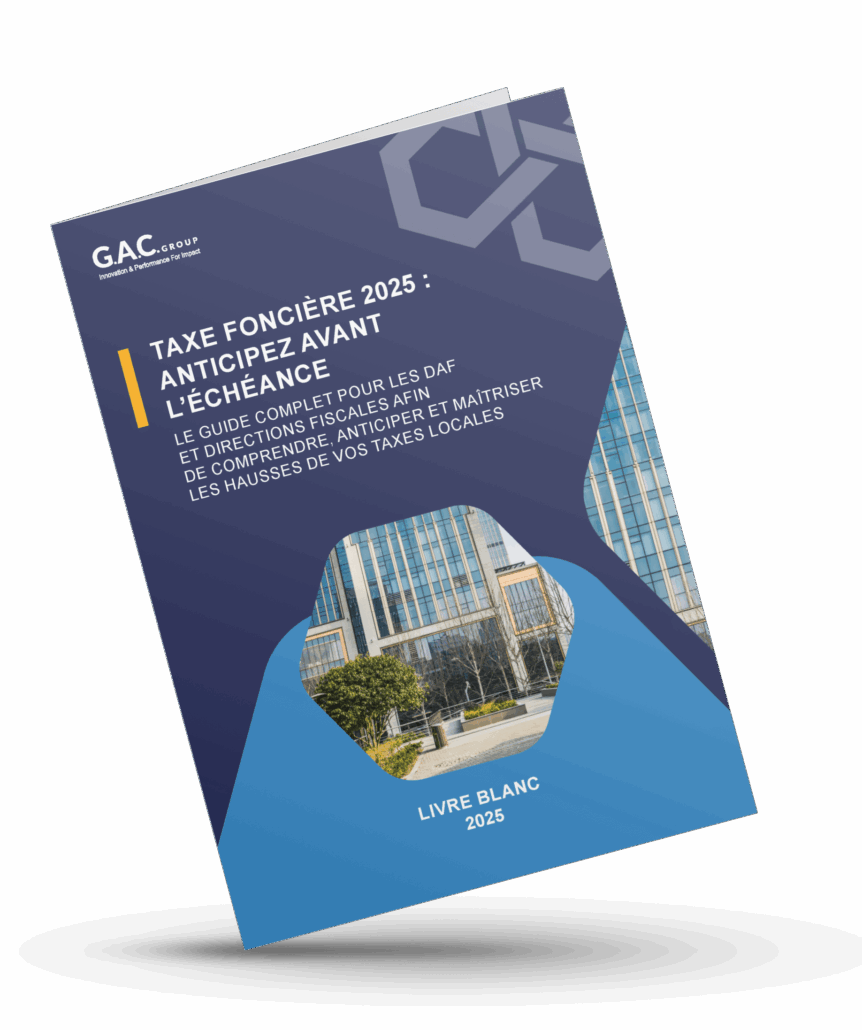
Have you received your property tax notice?
Don't leave it unanalyzed. This white paper gives you an overview of the current situation, with figures and comparisons.to better understand the evolution of taxes on your establishments. In principle, you have until December 31 of the year following the year of assessment to contest or request a review of your notice.
Newsletter
Keep up to date with the latest local tax news.
Subscribe to our newsletter.