Eco-design is no longer limited to reducing the environmental footprint of products: it is becoming a lever’sustainable innovation, capable of transforming your offerings, your processes, and your business model.
By integrating environmental and social criteria from the design stage onwards, it places your projects within a dynamic of’responsible innovation, meeting growing market expectations and regulatory obligations (AGEC, ESPR, REP, environmental labeling, etc.).
In a context where R&D, Innovation, and, CSR and Operations must balance performance, compliance, and sustainability, eco-design is becoming essential. strategic pillar of the’innovation.
Why incorporate eco-design into your innovation projects?
Eco-design reinforces innovation initiatives by combining technical performance, competitiveness, and reduced environmental impact.
Key objectives of eco-design
- Designing truly effective products and services sustainable and innovative
- Reducing environmental impacts (energy, CO₂, materials, waste, biodiversity, etc.)
- Integrate ESG criteria into your innovation projects
- Differentiate your offerings in a demanding market
- Anticipating future regulatory constraints
- Secure your access to public funding dedicated to sustainable innovation
Benefits of responsible innovation
Issues | Profits |
|---|---|
Environmental performance | More sober, circular, and resilient products |
Competitiveness | Reduction in material/energy costs |
Market | Competitive advantage, new sustainable markets |
Regulations | Compliant innovation by design (AGEC, ESPR) |
Image & ESG | Strengthening your position in sustainable innovation |
Reinventing your life cycle: a driver of innovation
Analyzing the life cycle of your products (LCA) is often the starting point for responsible innovation. Each stage—raw materials, production, transportation, use, end of life—can become a opportunity for innovation :
- New materials or recycled materials
- More efficient industrial processes
- Optimized logistics
- Design for repairability or circularity
- Innovative business models (service, rental, reuse, etc.)
Examples:
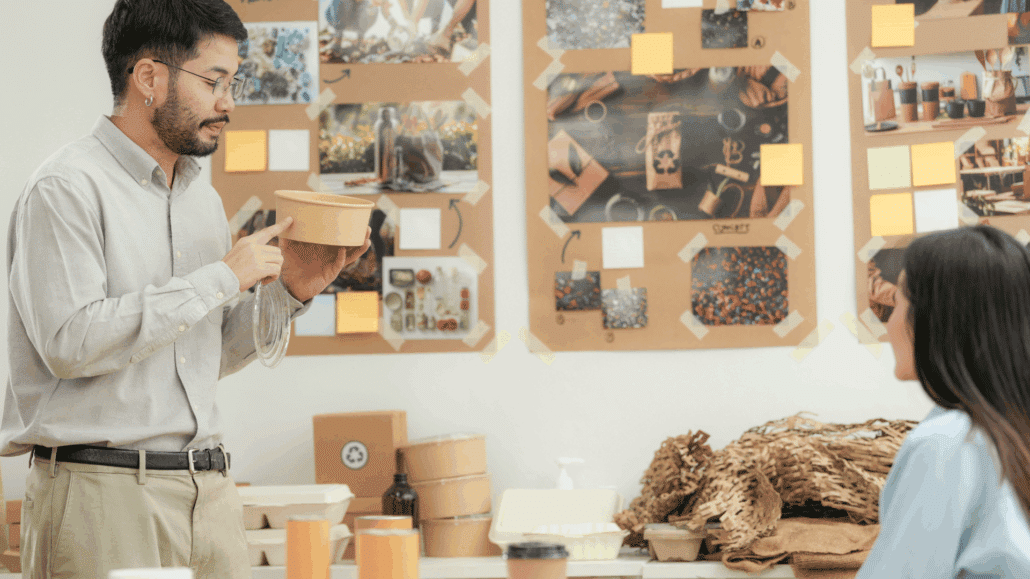
- Disposable packaging can be redesigned using more sustainable materials, improving its impact while reducing costs.
- A digital solution can incorporate eco-friendly software design to reduce energy consumption during use.
Theecodesign thus becomes a sustainable innovation accelerator, not just an environmental tool.
Funding available for eco-design and sustainable innovation
Today, several public programs (national and European) directly support initiatives to’ecodesign, d'sustainable innovation andresponsible innovation. This assistance, in the form of calls for projects, grants, or repayable advances, is regularly available to encourage companies to reduce the environmental impact of their products, services, or processes while strengthening their economic performance.
Here is an overview of the funding currently available to support your eco-design and sustainable innovation projects:
Device | Lead organization | Goal |
|---|---|---|
Eco-design studies for products and services | ADEME | Support studies on the diagnosis and implementation of eco-design |
Eco-design investments to improve environmental performance | ADEME | Supporting investment to reduce the environmental impact of products or services |
Advanced circularity in plastics, textiles, and elastomers (CAPTE) | ADEME | Supporting innovations for recycling and circularity (MPR) |
Critical metals 2 | Bpifrance | Securing supplies and recycling strategic metals |
Green Fund – Industrial Areas in Ecological Transition | ADEME | Supporting the ecological transition of industrial sites |